In stock, ships within 48 hours
For even more versatile surface finishing, pair this cleaning stick with a flap sanding wheel to maintain peak performance across all your sanding applications.
For detailed surface finishing between coats, our sponge wood options complement the Maxi Abrasive Cleaning Stick perfectly in any wood shop workflow.
If you're new to abrasive finishing, learn what brush sanding is to understand how these sticks complement automated brush sanding machines in your workflow.
Our abrasive cleaning sticks are also perfect for maintaining the brushes and flap wheels used in door sanding machines, extending their lifespan significantly.
For even more versatile finishing options in your shop, explore our linear board sanders designed to handle molding profiles and flat stock with precision.
For optimal results after surface preparation, explore our production finish sanding solutions designed for professional woodworking shops.
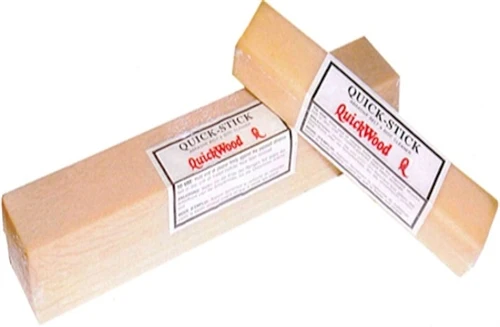
The Maxi is a large-format natural rubber cleaning stick that strips sawdust, pitch, resin and glue out of clogged abrasives in seconds. Hold it against a running sanding belt, disc, drum or flap wheel and the loaded debris transfers into the rubber, exposing fresh sharp grain underneath. The belt you were about to throw away cuts like new — most shops get two to three times the life out of every abrasive they clean. Safe on aluminum oxide, zirconia, ceramic and silicon carbide; no chemicals, nothing transfers to your workpiece.
An abrasive cleaner (also called a cleaning stick, belt eraser or abrasive rubber tool) is a block of natural crepe rubber used to unclog coated abrasives. Sanding doesn't usually wear abrasives out — it loads them: wood dust, resin and finish pack into the spaces between grains until the surface glazes over and stops cutting. A loaded belt burns wood, polishes instead of sanding, and heats up your workpiece. Pressing the rubber stick against the moving abrasive pulls that packed debris out of the grain without dulling the grit — which is why one inexpensive stick routinely saves hundreds of dollars in belts, discs and wheels.
Run the sander at normal speed, press the stick lightly against the moving abrasive for 2–5 seconds, and move it across the full width until the surface color returns to fresh grit. Clean early and often — the moment you see glazing or smell heat. Once resin bakes on, no cleaner recovers the belt. Works best on dry, cured residue: softwood pitch, sealer dust and paint clean off easily; wet glue should cure first.
Belt and disc sanders are the classic use, and drum sanders — restore cut rate mid-panel instead of swapping wraps. It reaches curved surfaces on spindle and sleeve sanders. And yes, it cleans flap wheels too: hold it against the spinning wheel and packed sealer dust flies out of the flaps, restoring the wheel's cut between grit changes. That matters if you run brush sanding — sealer sanding loads flap wheels faster than any other abrasive in the shop, and a few seconds with the Maxi between doors keeps the wheel cutting instead of burnishing. Replacement flap sets cost more than belts, so cleaning defers the swap: this is the cheapest of all abrasive cleaning tools and the one with the fastest payback.
Yes — cleaning stick, belt eraser, sandpaper cleaner and abrasive rubber tool all mean the same natural-rubber block. The Maxi is our large-format version: more rubber, more cleanings per stick.
No. Rubber is far softer than the abrasive grain — it pulls out the debris packed between grains and leaves the grit itself untouched.
Yes, and you should — hold it against the spinning wheel exactly as you would a belt. It's the fastest way to recover a sealer-loaded flap wheel.
The rubber wears as it cleans — the loaded outer layer crumbles away to expose clean rubber, so the whole stick is usable. In hobby use, years; in a production finish room, months.
When the grain is worn round rather than loaded flat. Cleaning restores clogged abrasives; nothing restores dull ones. Quick test: if the cleaned surface still burnishes instead of cutting, the grit is gone.
The Maxi is available in two sizes: 1.5 in. x 1.5 in. x 8 in. and 2 in. x 2 in. x 12 in. The larger size provides more rubber and more cleanings per stick.