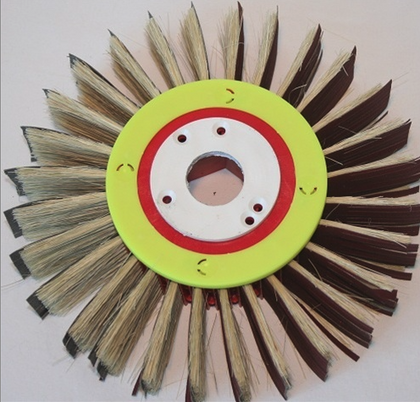
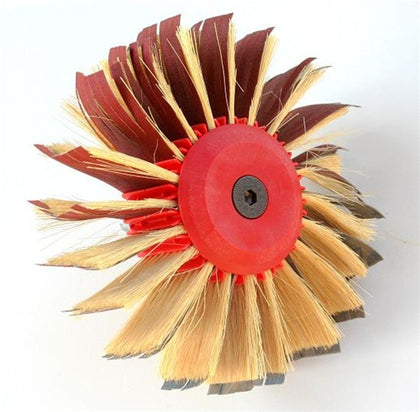
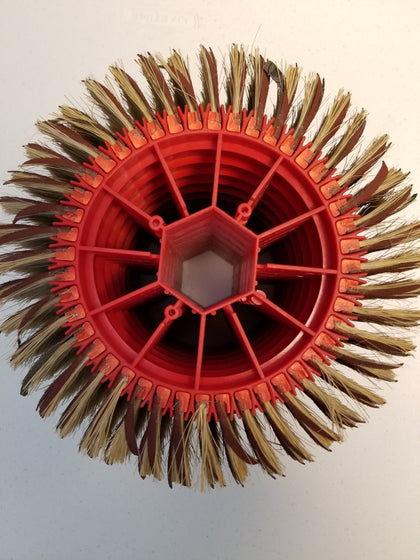
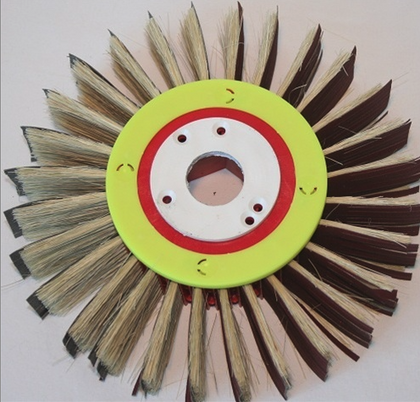
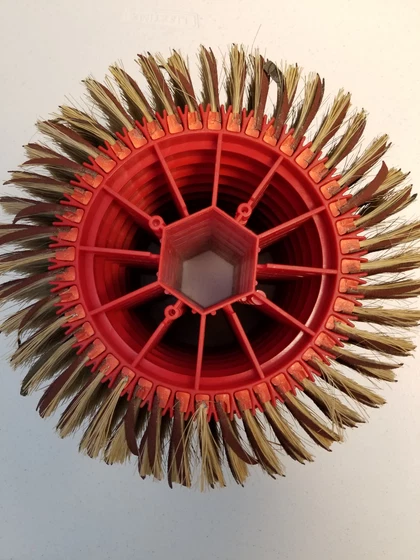
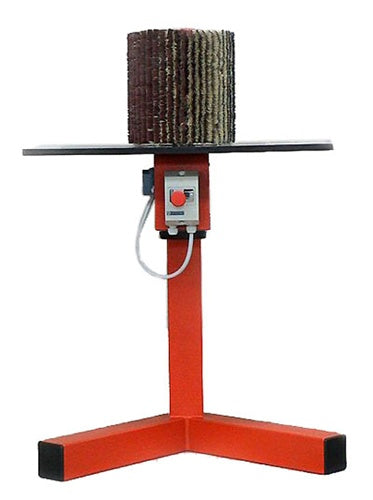
A flap wheel is the consumable at the heart of every QuickWood brush sanding system: overlapping abrasive flaps mounted around a hub that flex as the wheel spins, following flat faces, profiles, curves and recesses that rigid sandpaper can't reach. The same wheels run in our automatic machines, on pedestal and table sanders, on motor-mounted spindles, and in a drill-attached version for handheld work.
Three decisions: diameter, slot count, and trim height.
| Spec | Options | What it changes |
|---|---|---|
| Outer diameter | 8", 10", 12" | Match your machine or spindle setup; larger wheels carry more abrasive and run longer between changes. |
| Slot count | 28 or 44 | More slots = more, narrower flaps = softer touch that follows detail; fewer slots = firmer cut on flat stock. |
| Trim height | 45mm or 65mm | Shorter trim is stiffer and more aggressive; longer trim is more flexible for deep profiles and raised panels. Full guidance in choosing your flap wheel height. |
Wheels are available in grits to cover the full finishing sequence, from sealer sanding and denibbing through final finish. When flaps wear down, you don't replace the whole wheel: replacement flaps and QuickWood hubs keep your cost per part down.
Not sure what fits your machine? Call 1-866-888-5858, we've matched flap wheels to shop setups since 1975. Orders ship within 48 hours; free US shipping over $500.
Just need a wheel or two for a home project? Our DIY store flap-wheels.com sells the same flap wheels by the piece with free US ground shipping.
Whether you call it a flap wheel, a flapper wheel, a flap sanding wheel or a sanding mop, you're describing the same tool — and every wheel on this page answers to all four names. Because the flaps conform to the surface, a flapper wheel follows profiles, curves, raised panels and recesses that rigid sandpaper skips over; and because the flaps wear evenly, fresh abrasive is always exposed, so the cut stays consistent from the first door to the five-hundredth.
| Grit | Stage | What it does on wood |
|---|---|---|
| 80–100 | Shaping / heavy denib | Removes mill marks, levels raised grain, first pass on rough stock |
| 120–150 | White-wood sanding | The workhorse range — final sanding before stain or sealer |
| 180–240 | Sealer sanding | Denibs sealer and primer coats without cutting through |
| 280–320 | Finish sanding | Scuffs between topcoats for a glass-smooth final finish |
Rule of thumb: never jump more than one grit stage, and let the wheel's flexibility do the pressure work. If you're burnishing instead of cutting, your grit is too fine or your speed is too high.
Flap wheels are the sanding wheels built for wood — general abrasive suppliers sell flap wheels for metal, with aluminum oxide on stiff backing built for deburring steel. QuickWood wheels are engineered for wood finishing: flexible brush-backed flaps that follow grain and profile without burning, in the grit sequence wood finishing actually uses. For contour and inside-curve work where a flap wheel is too wide, see sanding drums; for texture and distressing, rustic steel brushes.
Yes. "Flapper wheel" and "flapper sanding wheel" are common names for the same tool. All the wheels on this page fit either name.
A flap disc is a flat angle-grinder abrasive built for grinding metal. A flap wheel is a cylinder of flexible flaps that wraps wood profiles and contours. If you're sanding wood — especially anything with shape — you want the wheel, not the disc.
Sanding shaped and profiled surfaces — doors, mouldings, turnings, raised panels, furniture parts — where the flexible flaps conform to contours that orbital sanders and rigid wheels can't follow. Full guide: what is a flap wheel?
Flap wheels are one part of a system: door and cabinet sanders run these same wheels in production, and sanding sponges cover contours and tight corners between passes.
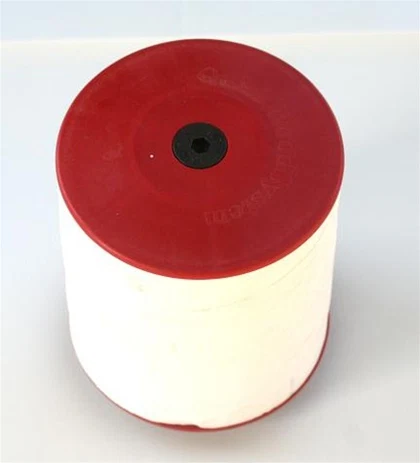
Yes. QuickWood makes a drill-mount flap wheel head available in 2" and 4" widths, so you can run the same wood-finishing flap wheels handheld without a dedicated machine.