In stock, ships within 48 hours
Pair this brush with a wheel flap to complete your sanding process and achieve a smoother, more refined finish on any wood surface.
These twisted steel brushes pair seamlessly with our full range of abrasives for sanding door surfaces to a smooth, professional finish.
For professional results, pair this twisted steel brush with our dedicated brush sanding machines designed to handle the toughest wood finishing applications.
Keep your twisted steel brush performing at its best by regularly using an abrasive cleaning stick to remove embedded wood fibers and debris.
For detail work that a drill brush can't reach, our hand sanding sponges let you smooth tight corners and contours by hand.
For optimal results after using this twisted steel brush, proceed to finish sanding to achieve a smooth, professional surface.
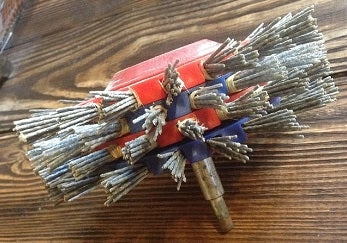
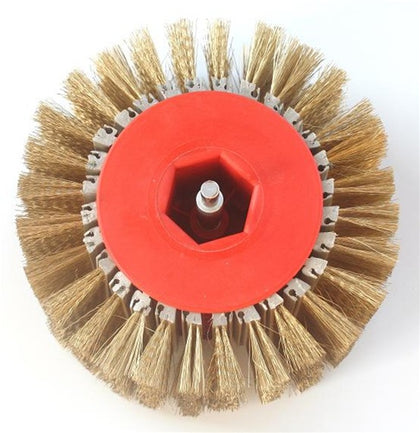
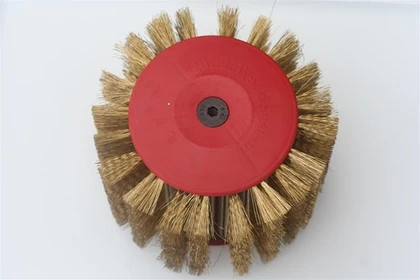
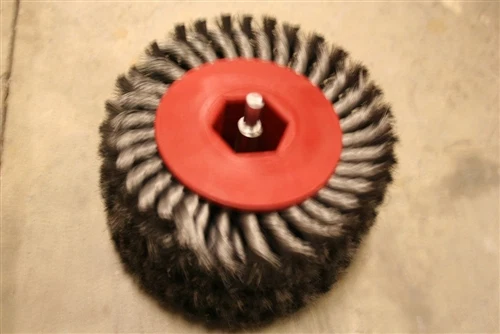
Most wire brushes for drills are throwaway cup brushes made for rust removal. This one is a rebuildable production tool: a machined head with a 3/8" pin drops into any standard drill chuck — cordless or corded — and carries three heavy-duty twisted steel brushes across a 2" or 4" working width. Run it down the grain and the twisted steel opens the soft grain and cuts authentic wear patterns that stains and glazes sink into. When the steel wears down, you replace the brushes, not the head.
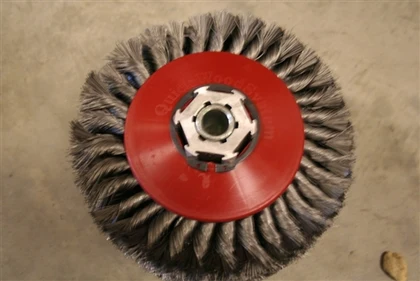
A standard crimped wire brush scratches the surface. Twisted steel is different: pairs of wires are wound around each other into stiff cables, so each tip strikes the wood with the full stiffness of the twist behind it. On wood that means it digs into the soft earlywood and leaves the hard grain standing — the high/low texture that makes reclaimed and weathered lumber look the way it does. You remove more material per pass, and because the twist holds the wire together, this steel brush for a drill sheds far fewer bristles and lasts several times longer than a crimped brush.
Light pressure in one pass gives subtle grain texture — enough to make stain grab unevenly like aged wood. Moderate pressure produces clear high/low weathered grain on pine, fir and cedar. Heavy pressure with repeat passes cuts deep rustic grooves for barn-wood and hand-hewn looks, even on hardwoods. Always run the brush with the grain; running across it leaves scratch marks instead of weathering.
| 2" head | 4" head | |
|---|---|---|
| Weight | 4 lbs | 7 lbs |
| Best for | Furniture parts, edges, one-handed control on a cordless drill | Doors, table tops, beams, wide boards |
| Drill | Any 3/8" cordless | 1/2" corded or high-torque cordless |
Chuck the 3/8" pin and tighten firmly. Set the drill to its lower speed range — 800–1,500 RPM is plenty; speed polishes, pressure cuts. Start the drill before touching the wood, then lay the brush on moving with the grain. Overlap passes and check depth every couple of passes. Follow with a drill-attached flap wheel in 120–180 grit to knock down fuzz and burnish the texture before stain or sealer — brushing alone leaves raised fibers that blotch under stain. Both tools share the same 3/8" pin design, so you can swap between them on one drill in seconds.
Doing production volume? The same twisted steel runs on our motor-spindle version in 4", 8" and 12" widths, and in our automatic brush sanding machines.
Yes — the 3/8" drive pin fits any standard 3/8" or 1/2" drill chuck, cordless or corded, and drill presses too. No hex shank, no arbor adapters.
It's built and balanced for wood distressing, and that's where it shines. The twisted steel will strip loose paint and scale from metal in a pinch, but for dedicated rust removal a cup brush is the cheaper tool. For wood texture, nothing touches it.
No — steel wool pads polish and burnish; twisted steel wire cuts texture into the grain. If you want distressing and weathered looks, this is the tool. If you want to buff a finish, use steel wool by hand.
Far longer than crimped-wire brushes — the twist keeps wires anchored so they wear down instead of flying off. Expect many hundreds of board feet per brush set. When they wear, replacement twisted steel brushes drop into the same head; you never re-buy the tool.
The light distressing head uses fine-gauge straight wire for subtle grain opening on softwoods. This twisted steel head is the heavy hitter — deeper texture, faster removal, works on hardwoods.
Most metal brushes sold for drills are crimped-wire cup brushes designed for rust and paint removal. This brush uses twisted steel: pairs of wires wound into stiff cables so each tip strikes with the full stiffness of the twist behind it. That construction digs into soft wood grain and leaves hard grain standing — the high-low texture that makes wood look reclaimed or weathered. It also sheds far fewer bristles and lasts several times longer than a crimped brush. The 3/8" pin fits any standard drill chuck, cordless or corded, so it mounts the same way a rust-removal brush would.